
Audience has moved to search engines and social platforms
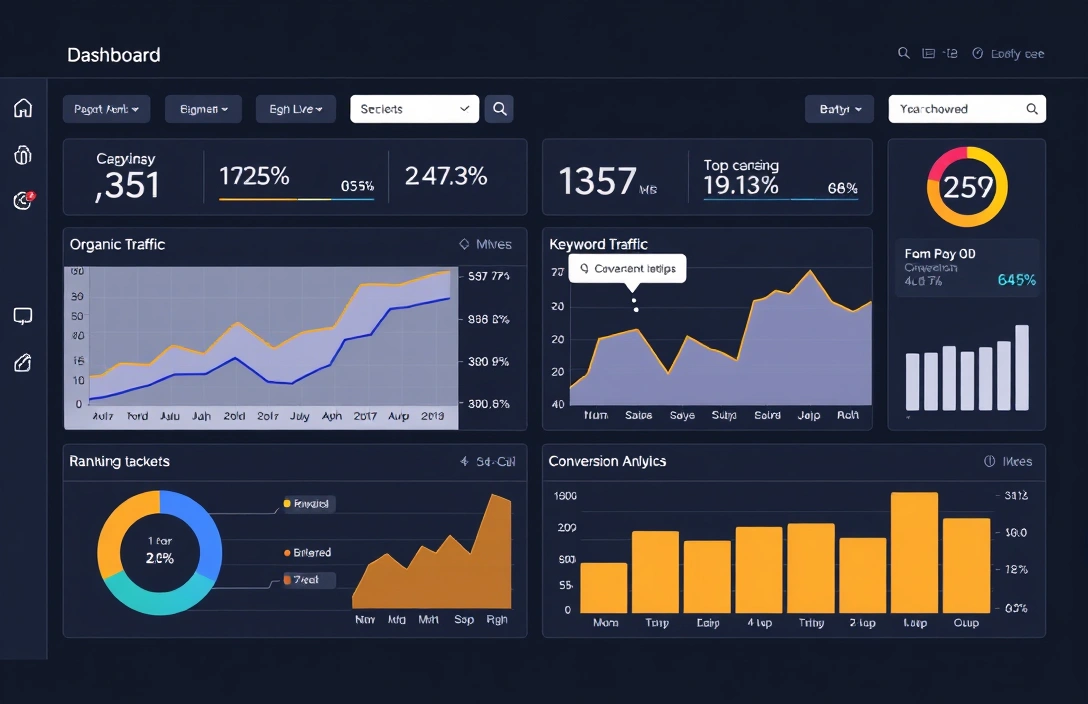
Buyers now research products on Google, YouTube, and social apps before they ever talk to a salesperson, which is why a brand with no presence in those results is invisible at the exact moment someone is deciding what to buy. The first diagnostic costs nothing: open your own analytics and check organic traffic and branded search volume against a competitor of similar size. If organic sessions are flat or near zero and almost nobody is searching your company name, the problem isn't a weak product — it's that the audience is looking in a place you haven't shown up.
That gap is the entire reason digital marketing as a discipline exists: it is the practice of meeting people in the channels where they already spend attention, rather than interrupting them somewhere else. The fix, in order, looks like this:
- Pull organic traffic and branded-search trend from your analytics tool for the last 12 months.
- Compare it against paid traffic and referral traffic for the same window — if paid dwarfs organic, you have no earned visibility to fall back on.
- Invest in SEO and content marketing aimed at the specific questions your buyers type into search engines, not just your product names.
- Publish on a fixed cadence for at least one full quarter before judging results, since indexing and ranking both lag publication.
- Track keyword ranking movement and organic-source conversions monthly to confirm the investment is working, not just that traffic is rising.
The confirmation step matters as much as the investment. Traffic without conversion tracking tells you people arrived, not that the visit was worth anything — so the loop only closes when ranking gains show up as leads or sales attributed to organic in your analytics, not as a raw pageview count.
Campaign is launched without a stated goal or defined audience

A campaign built before anyone writes down what it's for almost always fails at the measurement stage, because there's no fixed target to measure against. Spend gets spread across search ads, social posts, and email with no single owner deciding which one is supposed to produce the result, and analytics ends up with conversions that can't be attributed to any one channel because none of them were set up to be judged in isolation.
The correction is a sequence, not a checklist to do all at once:
- Write one goal in a measurable form — "40 demo requests this quarter," not "grow awareness."
- Define the audience narrowly enough that a channel choice becomes obvious: age range, job function, buying stage.
- Pick the channel that matches both the goal and the audience — a B2B lead-gen goal aimed at procurement managers points toward search and email, not a general social feed.
- Set the budget only after the channel is chosen, so spend follows the goal instead of the goal being reverse-engineered from whatever budget happened to be free.
- Measure conversions strictly against that one goal for the length of the campaign, resisting the urge to add secondary success metrics mid-flight.
This is the difference between a channel list and a selection procedure. Having seven plausible channels available is not useful on its own; what matters is the rule that eliminates six of them before you spend anything.
Beginner wants to enter digital marketing but has no track record
The blocker for a beginner is never the concept, it's evidence — employers and clients want to see that you've run something and can read the numbers it produced, not just that you can define the terms. The concrete path has a rough shape: learn the fundamentals for a few weeks, then spend a small amount proving you can execute.
| Step | What it involves | Approximate time | Cost |
|---|---|---|---|
| Structured coursework | A certification covering channels, analytics, and e-commerce fundamentals | 4–8 weeks part-time | Free to low-cost, depending on provider |
| Owned-channel practice | Start a blog, newsletter, or social account with no ad spend | Ongoing, 2–3 posts a week | Free |
| Small paid test | Run one search or social ad campaign with a fixed, tiny budget | 2–4 weeks | As little as the platform's daily minimum |
| Analytics review | Read the resulting traffic and conversion data and write up what worked | 1 week | Free |
The certification exists to prove you understand the vocabulary and the reporting; the owned campaign exists to prove you can act on it. Employers look for both, because a portfolio piece with real numbers attached — even small ones — carries more weight than a credential with no output behind it. The order matters: certifications without a campaign to point to are a common gap in an otherwise reasonable resume, and a campaign without any grounding in analytics tends to produce vanity numbers nobody can act on.
Earning routes from that point split several ways. Some beginners move into an in-house marketing role as an employee with a salary; others take freelance or contract work per project; a smaller group builds an agency serving several clients at once; and some earn through affiliate or referral commissions tied to content they publish rather than a client relationship at all. None of these requires choosing at the start — the owned-channel practice above works as evidence for any of them.
Traditional marketing
Traditional marketing is promotion through offline formats — print ads, television and radio spots, direct mail, billboards — bought and placed without the click-level tracking that digital channels provide. The contrast with digital marketing isn't that one works and the other doesn't; it's that traditional formats reach an audience defined by broadcast reach or mailing lists, while digital formats reach an audience defined by their own search or browsing behavior, and the second kind is measurable in a way the first usually isn't. A local business running both a mailer campaign and a Google Business Profile is not choosing between "old" and "new" marketing so much as choosing which one it can actually attribute results to.
Marketing channel
A marketing channel is the specific route by which a brand reaches its audience — search, social, email, paid display, and so on — and it's the organizing unit that almost every discussion of digital marketing structure is built around. The mistake that follows from listing channels is treating the list as fixed and complete, when in practice the boundaries move: what counts as a distinct channel in one framework is treated as a technique inside another.
That's also where the channel-versus-tactic distinction gets lost. Social media is a channel — a place an audience gathers. Paid social is a tactic performed inside that channel — buying placement rather than posting for free. The same split applies to search: organic ranking and paid search ads both live "in search," but one is earned through content and technical work and the other is bought per click. Confusing the two leads to budget decisions that don't make sense, like treating a Facebook page and a Facebook ad campaign as the same line item when they have different costs, different timelines to show results, and different skills behind them.
Search engine optimization
Search engine optimization is the practice of shaping content and site structure so pages rank in unpaid search results, without paying for placement. It sits upstream of almost everything else in a channel plan, because a page that doesn't rank produces no traffic for any other tactic to work on — no email list to build, no retargeting audience to capture, no social share to happen.
The reason SEO takes longer to show results than paid search is structural: a search engine has to crawl, index, and rank a page before it can appear, and that process runs on its own timeline regardless of how good the content is. That's the tradeoff worth stating plainly — paid search buys visibility immediately and stops the moment spend stops; SEO takes longer to build but keeps producing traffic without continued spend once it ranks.
Paid search advertising
Paid search advertising is buying placement on search engine results pages for chosen queries, typically priced per click. Unlike SEO, the mechanism is direct: you bid on a keyword, you write the ad, and if you win the auction and someone clicks, you pay — visibility starts the day the campaign launches rather than months later.
The tradeoff runs the other way from SEO's: paid search is fast to start and easy to measure per click, but the visibility disappears the moment the budget does. It also depends heavily on the same audience-and-goal discipline covered above — a paid search campaign aimed at the wrong keyword, or with no clear conversion goal attached, spends money proving nothing.
Social media marketing
Social media marketing is using platforms like Instagram, LinkedIn, TikTok, and YouTube to build audience reach and engagement rather than to buy placement outright. It works differently depending on the platform's own mechanics — an audience built on LinkedIn behaves nothing like one built on TikTok, and content that performs on one rarely transfers unedited to the other.
The same channel-versus-tactic split from earlier applies here too: organic posting on a platform is the channel-level activity, while running ads on that same platform is a paid tactic layered on top. A brand can do either without the other, and small-budget advertisers in particular often get more out of consistent organic posting than out of a thin, underfunded paid social budget spread across several platforms at once.
Content marketing
Content marketing is the practice of creating and distributing content — articles, videos, guides, tools — built around what a defined audience already wants to know, with the goal of attracting and retaining that audience over time rather than interrupting them with an ad. The Content Marketing Institute frames it as a strategic approach centered on creating and distributing "valuable, relevant, and consistent content" to attract a clearly defined audience, with the ultimate aim of driving profitable customer action — the emphasis on defined audience is what separates it from publishing content generally.
It differs from the other channels above in one important way: content marketing isn't a single placement you buy or a single platform you post to, it's a supply of material that other channels then distribute. An SEO strategy needs pages to rank; a social channel needs posts to publish; an email program needs something to send. Content marketing is usually the thing being distributed through all three, which is why it tends to sit underneath a channel plan rather than beside it.
What do you mean by content marketing?
In practice, content marketing means producing material that answers a specific question your audience already has, rather than material that talks about your product directly. A blog post explaining how to choose a piece of equipment, a video walking through a process, or a downloadable guide on solving a problem your buyers face are all content marketing when they're built to earn attention on their own merit, not to advertise.
Salesforce's definition describes it as a strategy centered on creating and sharing content — blogs, videos, social posts — that doesn't explicitly promote a brand but is intended to stimulate interest in its products or services. That indirection is the defining feature: the content earns trust first, and the commercial relationship follows later, often well after the piece was read.
How much do content marketers make?
There isn't one figure, because "content marketer" covers several different earning models rather than one job title with one salary. The main paths are:
- Salaried, in-house: employed by a single company, usually with the most predictable income and the least income upside.
- Agency employee: salaried but working across multiple client accounts, often with a title tied to a specific deliverable (writer, strategist, manager).
- Freelance/contract: paid per project or per piece, income varies with how much work is taken on and how it's priced.
- Affiliate or creator income: earnings tied to referral commissions or platform monetization rather than a client relationship at all.
Because these are structurally different arrangements — one is a wage, one is project-based, one is commission-based — a single average salary figure would flatten distinctions that matter more than the number itself. What's consistent across all of them is that the evidence a beginner needs to enter any one path is the same: a portfolio built from an owned channel, described above, with real traffic or conversion numbers attached to it.
Can you give me an example of content marketing?
A concrete example: a company that sells accounting software publishing a free guide on how small businesses should prepare a quarterly tax filing, with no direct product pitch inside the guide itself. The guide answers a real question the target audience already has, and the software gets mentioned only as a natural aside or in a closing call to action — the content's value stands on its own regardless of whether the reader ever buys anything.
Adobe's overview of content marketing basics frames the same idea around formats: blog posts, how-to videos, email newsletters, and downloadable templates all count as content marketing when they're built around audience questions rather than product features. What makes any of these an example of the discipline, rather than just "content," is that a defined audience and a retention goal sat behind the decision to make it — not just that it exists in one of those formats.
Does content marketing still work?
Yes, but the honest answer is conditional on time horizon and consistency, not on the format being inherently effective. Loyola University Maryland's overview of content marketing frames it as a long-term strategy: it builds trust and authority incrementally, rather than producing an immediate spike the way a paid ad does, and abandoning it after a few weeks because traffic hasn't moved is the most common way it fails to "work."
The practical test isn't whether content marketing works in general — it's whether your own analytics show organic traffic and conversions from content rising over a full quarter or two of consistent publishing, matched against the goal and audience defined at the start. If that tracking was never set up, the honest answer to "did it work" is that there's no way to know yet. Set up the tracking first, publish on a fixed schedule, and revisit the numbers after a full reporting cycle rather than after the first few posts.