Site gets little traffic from search (low visibility)
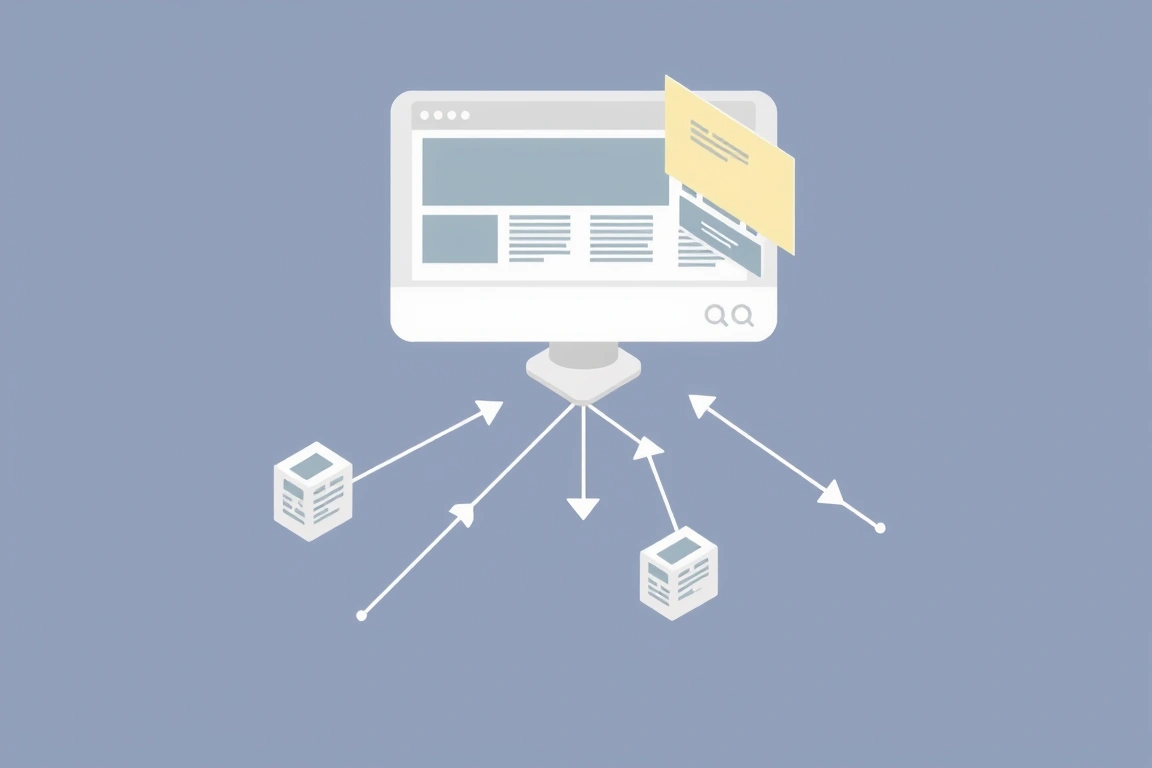
Low organic traffic almost always means a page is invisible for the terms people actually type, not that the page is somehow broken. Before touching content, it helps to understand what has to happen for a page to show up at all: a search engine's crawler has to find the page, its indexer has to store and categorize that page, and its ranking system has to decide where it belongs relative to every other indexed page competing for the same query. NASA's Planetary Data System documentation lays out this crawl-index-rank chain plainly, noting that a page which is never crawled or never indexed cannot rank regardless of how well it is written (NASA PDS, Search Engine Optimization).
Once a page is confirmed as crawlable and indexed, the diagnosis usually comes down to keyword mismatch: the page talks about a topic in the site owner's language, not the customer's. Keyword research tools surface the actual phrases people search and, critically, the intent behind them — whether someone is looking for information, comparing options, or ready to buy. Sorting keywords by intent before writing anything is the step most beginner guides skip.
| Intent type | What the searcher wants | Typical keyword shape |
|---|---|---|
| Informational | An answer or explanation | "how does X work" |
| Navigational | A specific site or brand | brand name + product |
| Transactional | To buy or sign up now | "buy," "price," "near me" |
A practical first pass for a beginner working alone, using only free tools, looks like this:
- Confirm the page is indexed by searching
site:plus the exact URL. - Pull the actual queries the site already gets impressions for from a free search console.
- Group those queries by intent using the table above.
- Rewrite the title tag, the main heading, and the first paragraph around the highest-intent match query, following the same principle that on-page terms should mirror real search phrasing rather than internal jargon (Understanding SEO Basics, eWay-CRM).
- Wait for re-crawling, then check analytics again before changing anything else.
This is also where the three buckets of SEO work separate cleanly: on-page (titles, headings, body copy), technical (whether the page can be crawled and indexed in the first place), and off-page (links and mentions from elsewhere). A beginner who cannot tell which bucket a problem belongs to will fix the wrong thing first.
Ecommerce product pages compete for transactional queries
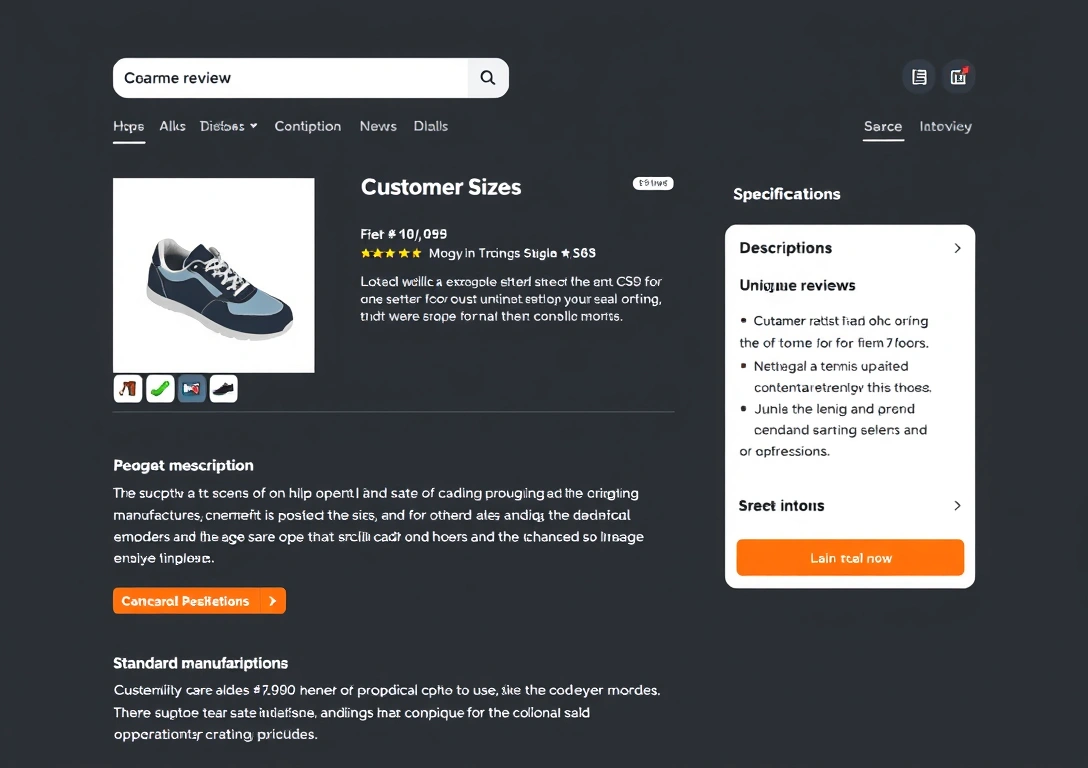
Product and category pages fail to rank for buying-intent searches for a structural reason: they usually contain the least original text of any page type on a site. A product page built from a manufacturer's stock description is, word for word, identical to hundreds of competing pages, which gives a search engine nothing distinctive to match against a query.
Two additions change that without touching the merchandising itself:
- Unique product copy that answers the specific questions a buyer has at the transactional stage — sizing, compatibility, use case — rather than repeating spec sheets.
- Customer reviews, which add fresh, keyword-varied text to a page on an ongoing basis without the store owner writing anything new.
Neil Patel's ecommerce SEO guide frames this as treating product and category pages as content assets in their own right, arguing that thin, duplicated descriptions are one of the most common reasons ecommerce sites underperform on transactional queries relative to their advertising spend (Neil Patel, The Definitive Guide to Ecommerce SEO). Reviews carry a second benefit beyond text volume: they are updated continuously, which gives a search engine a signal that the page is still active and relevant, something a static description page can never provide on its own.
Store owners often treat reviews as a trust or conversion feature and descriptions as a copywriting task. Both are that, but they are also the mechanism by which a product page earns a place in results for the searches that lead to a purchase.
Good content exists but still does not rank
A well-researched, well-written page can sit unranked for months, and the reason is rarely the writing. It is usually that nothing points to it — not other pages on the same site, and not pages anywhere else on the internet.
Internal linking solves half of this: connecting a new page from existing, already-indexed pages gives the crawler a path to find it faster and tells the ranking system how the page fits into the site's topic structure. The second half is external discovery, and social media is the most direct lever a small site has for that. Sharing a page where an audience already gathers does not itself change ranking, but it increases the chance that someone else links to it, cites it, or mentions it — and those external signals are what contribute to ranking improvements that on-page work alone cannot produce. General SEO guidance from academic web teams echoes this two-part model: content and structure earn crawlability, while outside links and mentions earn authority (Indiana University, Web & Email Guidelines).
The order matters here. Promoting a page before it is internally linked and properly optimized wastes the attention; optimizing a page and never promoting it leaves it undiscoverable. Publishing is the first half of the work, not the whole of it.
Ranking
Ranking is simply the position a specific page holds for a specific search query — it is not a fixed property of a site or a domain, and a page can rank differently for every query it happens to match. Because ranking is query-specific, a single page can sit near the top for one phrase and be nowhere for a close variant, which is why keyword grouping by intent matters more than chasing one "best" term.
Ranking positions also move, and what a given position is worth has changed. Search results now frequently include AI-generated overviews above the traditional list, which can reduce the number of clicks a page receives even when its position holds steady. That does not make ranking pointless — a page still has to rank well to be eligible for citation inside those overviews or to appear below them — but it changes what "success" looks like: click-through rate at a given position is no longer as stable as it once was, so tracking position alone without tracking actual traffic can be misleading. This is one reason analytics, not position, should be the final judge of whether an optimization worked.
Keyword
A keyword is the query term or phrase a page is built to match, and choosing it is the actual decision point in SEO — everything else is execution. Keywords are not interchangeable: an informational keyword like "what causes X" belongs on a blog or explainer page, while a transactional keyword like "X for sale" belongs on a product or service page, and putting the wrong content type against the wrong keyword is a common reason otherwise solid pages underperform.
A related discipline is targeting one primary keyword and a small set of closely related variants per page rather than trying to rank a single page for many unrelated terms. Guidance aimed at small organizations and associations frames keyword selection as matching the searcher's actual words, not the organization's internal terminology, since visitors search in plain language even when the industry uses different terms internally (Surgical Review Corporation, Tips to Boost SEO).
Social media
Social media is not a ranking factor in the direct sense — a search engine does not read follower counts — but it is the distribution channel that produces the links and mentions that do factor into ranking. A page shared to an engaged audience gets read by people who run other websites, write newsletters, or maintain resource pages, and some fraction of them link back. That link is the actual signal; the social share is the mechanism that made the link possible.
This distinction matters for setting expectations. A post that gets shared widely but generates no external links or repeat visits has produced attention without producing SEO value. Treating social distribution as a step toward earning links, rather than as the goal itself, keeps the measurement honest.
Analytics
Analytics is how anyone judges whether an SEO change actually did anything, and it needs a baseline before it needs an opinion. Comparing traffic before and after a change is meaningless without first recording what traffic, ranking position, and click-through rate looked like for at least several weeks prior, since normal week-to-week variation can otherwise be mistaken for the effect of the change.
Timelines matter as much as the baseline. Search engines have to re-crawl a changed page, re-index it, and then re-rank it against competing pages — a process that does not complete overnight, and general SEO guidance for beginners consistently frames results as a matter of weeks to months rather than days (eWay-CRM, Understanding SEO Basics). Judging a keyword rewrite, an internal linking pass, or a new set of product reviews after only a few days is judging noise, not signal.
The practical habit is straightforward: record baseline rank and traffic for the target keyword before making a change, make one change at a time where possible, and check again only after enough time has passed for re-crawling and re-ranking to have run its course. Anything less leaves the question of what worked unanswered.